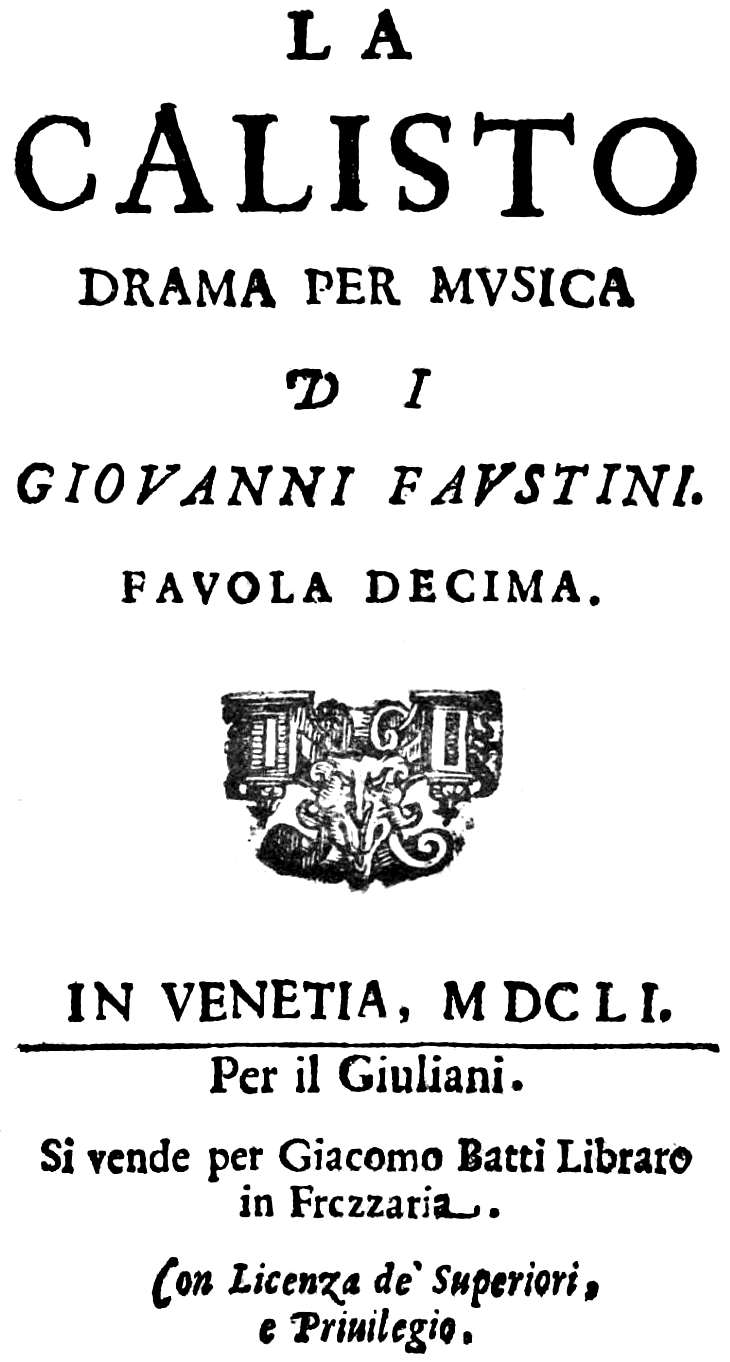
OperaPremiered 1651Libretto by Giovanni Faustini
Synopsis
Francesco Cavalli's La Calisto stands as a masterwork of seventeenth-century Venetian opera, a work that transforms classical mythology into an exuberant celebration of desire, transformation, and divine caprice. The opera follows the nymph Calisto, devoted attendant to the goddess Diana, whose peaceful existence shatters when Jupiter, the king of the gods, becomes consumed with passion for her. Disguising himself as Diana herself, Jupiter seduces the unsuspecting nymph, setting in motion a cascade of celestial intrigue and earthly consequence. As the truth unravels—Calisto's pregnancy betraying her lost innocence—she faces the wrath of the real Diana and the scorn of her former companions. Cavalli's brilliant score captures the intoxicating swirl of divine meddling and mortal vulnerability, weaving together moments of sensuous beauty with comic invention. The work pulses with dramatic energy as gods and mortals collide, desires clash, and the boundaries between celestial power and human agency blur into magnificent confusion. La Calisto remains a testament to Cavalli's genius for musical storytelling, blending mythological grandeur with intimate emotional truth.
Signature Interpreters
Performers most associated with this work.