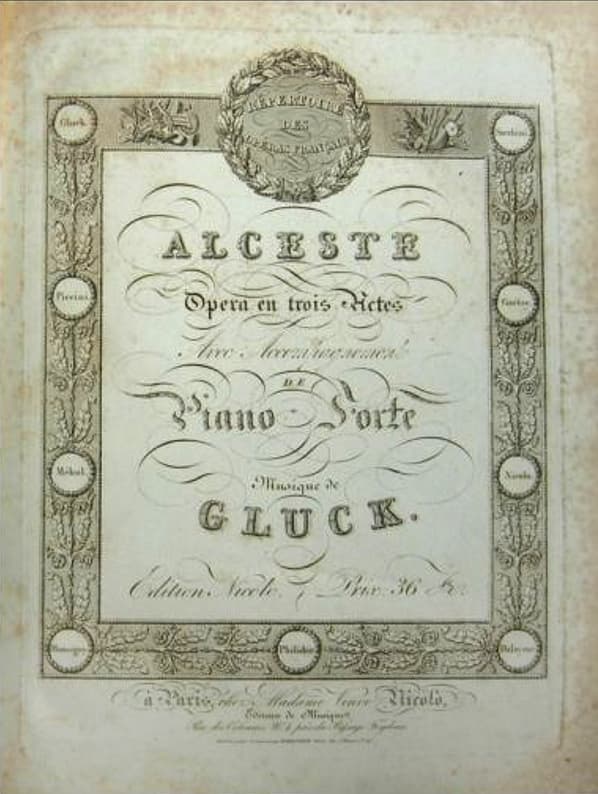
OperaPremiered 1767Libretto by Ranieri de' Calzabigi
Synopsis
Christoph Willuck's Alceste stands as a revolutionary work in operatic history, stripping away the ornamental excess of earlier baroque traditions to forge a path toward musical drama of austere grandeur and emotional immediacy. The opera centers upon Alcestis, devoted queen of Thessaly, whose husband King Admetus lies mortally ill. When the Oracle of Apollo declares that only a willing sacrifice can spare the king's life, Alcestis makes the ultimate gesture of love and duty: she offers herself to Death in his stead. Her descent into the underworld unfolds as a spiritual pilgrimage, a journey through darkness that tests not merely her courage but the very foundations of human devotion and divine mercy. Gluck's score eschews virtuosic display in favor of profound simplicity—each musical phrase serves the emotional truth of the moment rather than the singer's ambition. The work's dramatic power emerges from this marriage of restraint and intensity, creating an atmosphere of noble resignation punctuated by moments of shattering pathos. Alceste ultimately presents a meditation on sacrifice, conjugal devotion, and the possibility of redemption through love, asking whether even Death itself might yield to the force of human commitment.