Ballet
Synopsis
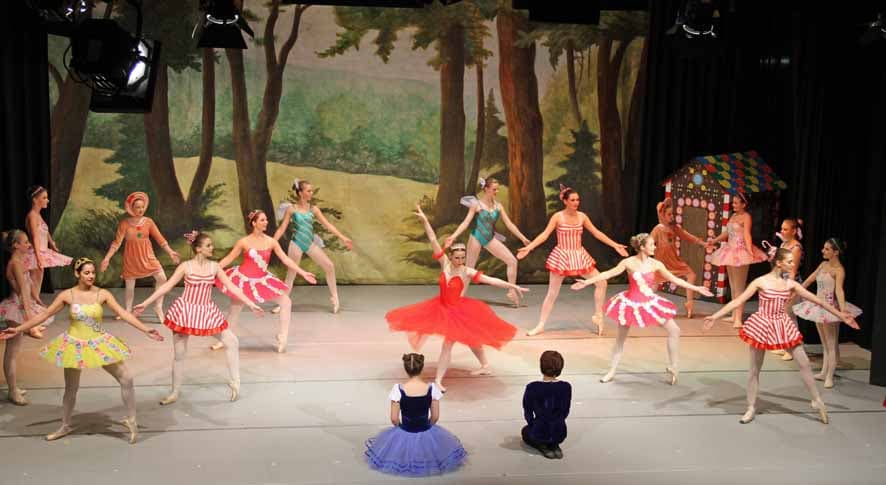
<p>In 1890, Engelbert Humperdinck’s sister Adelheid Wette asked him to compose the music for a children’s performance based on a tale by the Grimm brothers (Jacob, 1785-1863 and Wilhelm, 1786-1859) which she hoped to organize for her husband’s birthday.</p><p>The project quickly evolved and gave rise to the definitive libretto of the Märchenoper which was completed in december 1890. Compared to the Grimm tale, Adelheid Wette’s libretto was greatly simplified for reasons of dramatic effectiveness, but also to limit the length and even violence of the original.</p><p>The work was enriched with children’s songs and popular melodies evoking brahms‘ <i>Volkslieder</i>. Strongly influenced by Wagner, the composer drew inspiration from continuous melody and the notion of the leitmotiv with the use of recurrent themes.</p><p>The work was an immediate success. Within months, <i>Hänsel und Gretel</i> had made a name for itself on stages throughout Germany. Gustav Mahler conducted the work in Hamburg in 1894. <i>Hänsel und Gretel</i> would become the first opera to be rebroadcast by radio in Europe (from Covent Garden on January 6<sup>th</sup>, 1923).</p><p style="font-size:0.8rem;"><br>Director: Andy Sommer<br>© Opéra de Paris Production – Bel Air Media – France 2013</p>