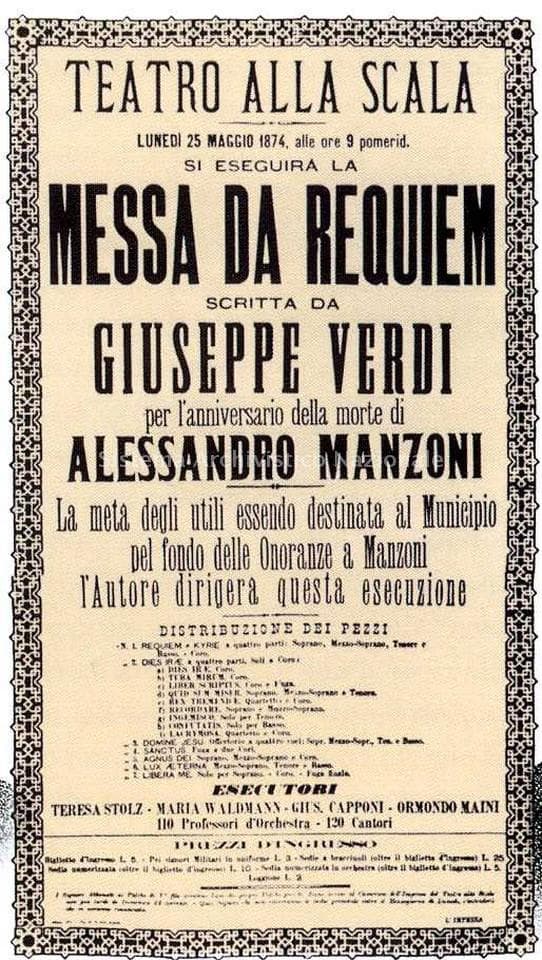
ClassicalPremiered 1874
Synopsis
Verdi's monumental Requiem sets the Latin Mass for the Dead to music of overwhelming dramatic power and spiritual depth. Composed as a memorial to Alessandro Manzoni, the work transcends liturgical convention to become a profound meditation on mortality, judgment, and redemption. The score alternates between moments of intimate introspection and apocalyptic grandeur, particularly in the terrifying Dies Irae sequence where Verdi conjures visions of divine wrath and cosmic upheaval. The work demands four solo voices—soprano, mezzo-soprano, tenor, and baritone—alongside a full chorus and orchestra, creating a rich tapestry of human voices confronting eternal questions. Rather than offering theological certainty, Verdi's Requiem captures the emotional turbulence of faith itself: fear and hope, despair and consolation, individual vulnerability and collective prayer. The final Libera me returns to intimate supplication, leaving listeners suspended between doubt and faith.
Signature Interpreters
Performers most associated with this work.