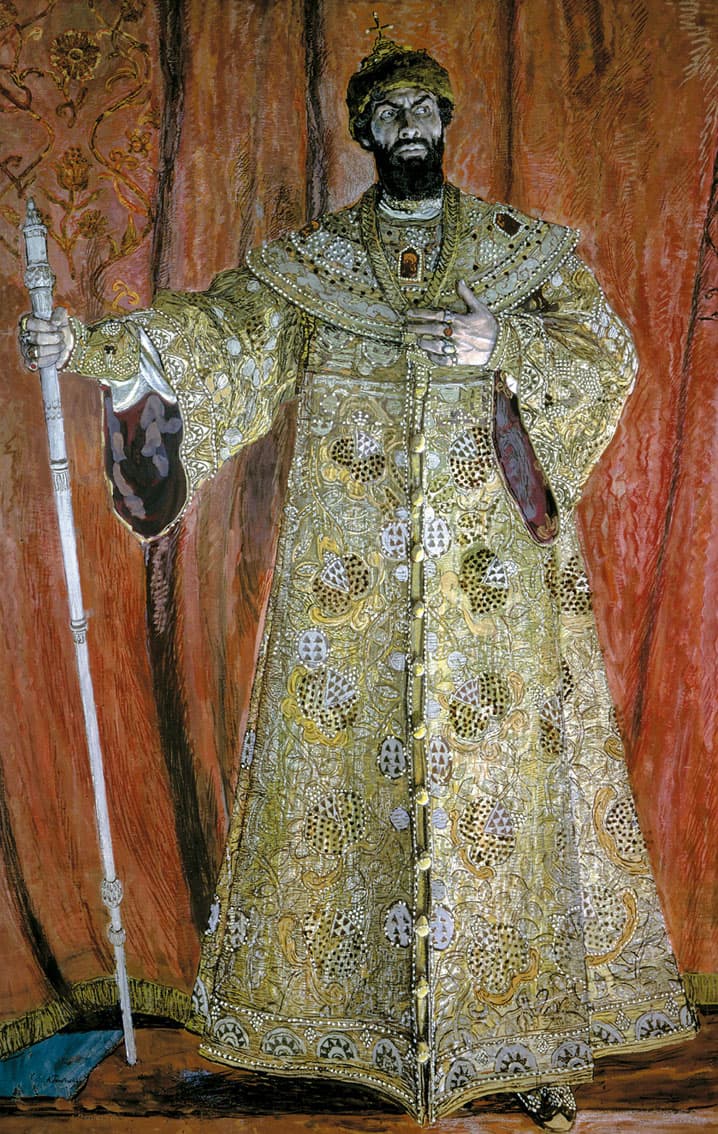
OperaPremiered 1874Libretto by Modest Petrovich Mussorgsky
Synopsis
Mussorgsky's Boris Godunov stands as one of opera's most historically ambitious and psychologically penetrating works, charting the rise and catastrophic fall of a Russian tsar consumed by guilt and paranoia. The opera unfolds across a vast canvas of Russian life—from the clamoring streets of Moscow to the intimate chambers of power—as Boris, a former regent who has seized the throne, confronts the specter of his past. A mysterious pretender claiming to be the rightful heir emerges from Poland, igniting a cascade of political intrigue, religious fervor, and popular upheaval that threatens to topple the usurper. Yet the true drama resides not in external conflict but in Boris's own tormented psyche: haunted by the violent act that secured his crown, he descends into madness as supernatural forces seem to close in around him. Mussorgsky's genius lies in his unflinching portrayal of power's corrosive effect on the human soul, rendered through music of extraordinary harmonic daring and orchestral color. The composer fashions a work that is simultaneously a political thriller, a psychological tragedy, and a sweeping historical fresco, with the Russian people themselves emerging as a collective protagonist whose voice rises in scenes of startling dramatic power.