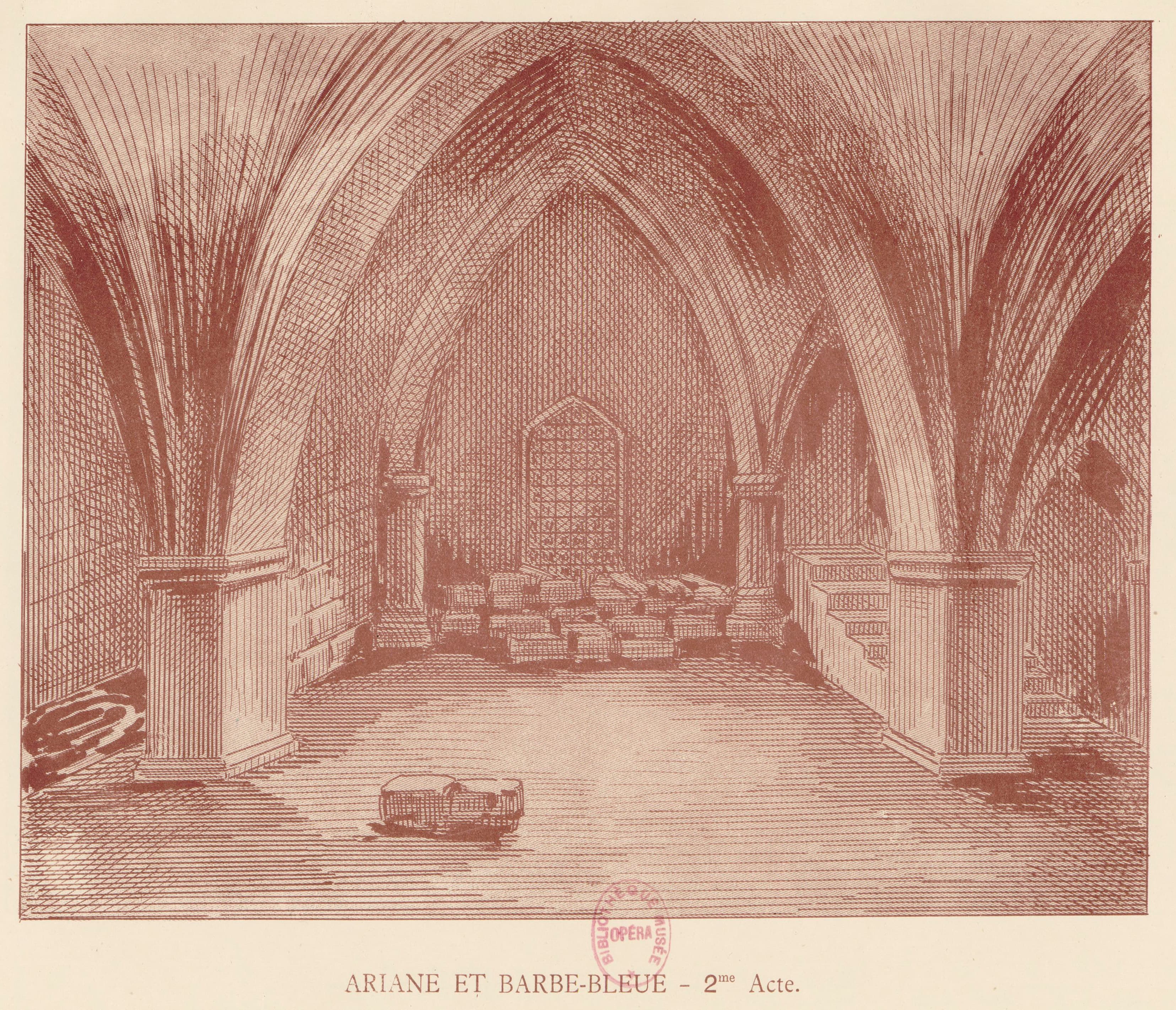
OperaPremiered 1907Libretto by Maurice Maeterlinck
Synopsis
Ariane et Barbe-Bleue stands as Paul Dukas's only completed opera, a haunting reimagining of the Bluebeard legend that transforms the familiar fairy tale into a profound meditation on liberation and self-discovery. The work follows Ariane, the fifth wife of the mysterious nobleman Barbe-Bleue, as she arrives at his shadowed castle to find not a tyrant demanding obedience but a complex figure whose previous wives remain mysteriously imprisoned within the fortress walls. Rather than fleeing in terror or seeking revenge, Ariane becomes determined to free the captive women, venturing into the castle's forbidden chambers and confronting the darkness that binds them all—both literally and spiritually. Dukas's lush, impressionistic score mirrors this psychological unfolding, oscillating between moments of ethereal beauty and brooding intensity. The opera eschews melodramatic villainy in favor of exploring the ambiguous bonds between captor and captive, autonomy and desire, light and shadow. As Ariane moves through the castle's mysteries, she discovers that true freedom demands not escape but understanding, and that the women she seeks to liberate may harbor their own complex attachments to their gilded prison.