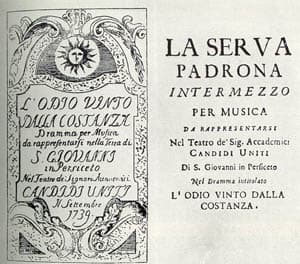
OperaLibretto by Gennaro Antonio Federico
Synopsis
Giovanni Battista Pergolesi's *La Serva Padrona* stands as one of opera's most delightful comedies, a work of deceptive simplicity that revolutionized musical theater. This two-act intermezzo unfolds in the home of Uberto, a wealthy bachelor whose household is thrown into magnificent chaos by his clever servant Serpina. With wit sharper than any blade and a scheming heart wrapped in feminine charm, Serpina manipulates her aging master with calculated flirtation and elaborate ruses, determined to transform her station from servant to mistress of the house. Their verbal sparring crackles with irresistible energy, while a second servant, Vespone, observes with bemused silence—his pantomime adding layers of physical comedy to the verbal fireworks. Pergolesi's score sparkles with infectious melodies and buoyant orchestration that perfectly captures the spirited battle of wills between master and maid. The opera's economy of means—minimal cast, intimate setting, straightforward harmony—belies its genius for capturing human nature: ambition, desire, the games we play for love or advantage. What emerges is a portrait of social hierarchy turned upside down, where cunning and charm prove mightier than rank or authority, all wrapped in music of irresistible charm.