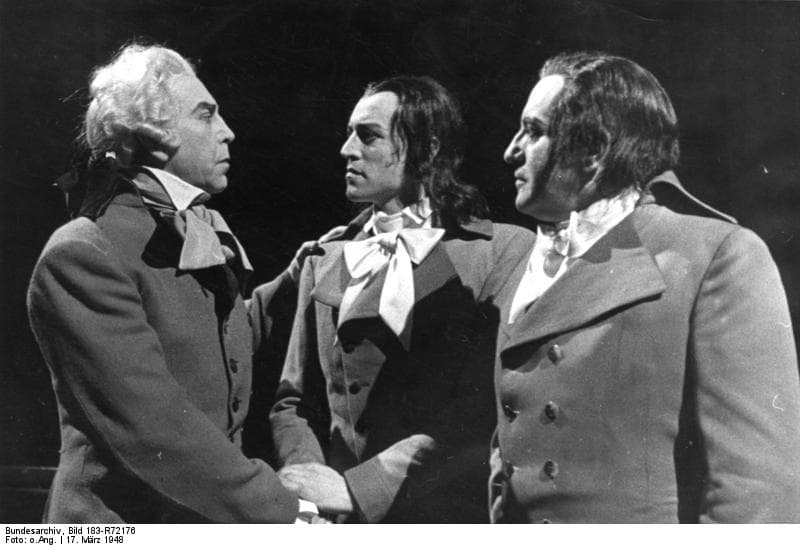
Opera
Synopsis
Dantons Tod stands as one of the most searing operatic meditations on revolutionary idealism's collapse into tyranny. Based on Georg Büchner's incandescent play, the work dramatizes the final days of Georges Danton during the French Revolution's Reign of Terror, as the architect of revolution finds himself targeted by the very machinery he helped forge. The opera traces Danton's existential exhaustion and his former ally Robespierre's inexorable march toward mass execution, capturing the poisoned atmosphere of 1794 Paris where suspicion devours its own children. Rather than heroic grandeur, the work presents revolution as a consuming maw—passionate speeches give way to bureaucratic butchery, ideological fervor masks personal vendetta, and the guillotine waits with mathematical indifference. The music oscillates between moments of baroque intricacy and raw, modernist anguish, mirroring a society fracturing under its own contradictions. Dantons Tod ultimately refuses easy moralizing: it presents neither tyrant nor martyr, but flawed men trapped in historical currents they can neither control nor escape, their rhetoric hollow against the drum of boots and the fall of the blade.