All Collections
Operamulti
One-Act Operas Worth Your Hour
Eight compact masterpieces that prove opera doesn't require a whole evening
4 selections · Stage Door Society Editorial
The Discipline of the Single Act
The full-length opera — three to five acts, three to five hours — is the standard form. But some of opera's most perfect works occupy a single act: sixty to ninety minutes that build, sustain, and release a single dramatic argument.
The one-act format demands a particular economy. There is no time for subplot, no space for extended exposition. Every element must serve the central dramatic event.
Cavalleria Rusticana and Pagliacci
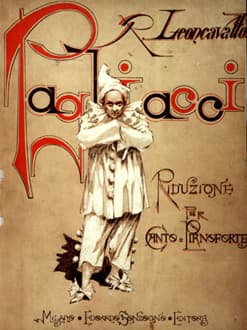
Traditionally performed together as Cav e Pag, these two one-act verismo masterpieces are the foundational texts of the form. Mascagni's Cavalleria (1890) tells a story of Sicilian honor and betrayal in seventy-five minutes of concentrated power. Leoncavallo's Pagliacci (1892) introduces a meta-theatrical layer — a commedia dell'arte performance within the opera — that gives its tragedy a particularly bitter edge.
Bluebeard's Castle
Bartók's single opera (1911) is the 20th century's most psychologically intense one-act work. The entire opera is a duet between Bluebeard and his new wife Judith, staged in front of seven doors that she insists on opening despite his warnings. What she finds behind each door is a different manifestation of her husband's inner life.