Curated editorial journeys through the performing arts — assembled by the Stage Door Society editorial team.
57 collections
The best performing arts currently available on free platforms
Opera, ballet, and theatre available on OperaVision, Medici.tv, PBS Great Performances, and YouTube — no subscription required.
Great performing arts are more accessible than they have ever been. This is where to find them.
The complete theatrical vision of the twentieth century's defining musical dramatist
Stephen Sondheim's ten canonical shows form a coherent artistic project: the investigation of isolation, ambition, and the cost of self-knowledge.
The ten shows form one of the twentieth century's most sustained and ambitious artistic projects.
The ten shows every serious theatregoer should know
From Rodgers and Hammerstein to Sondheim: the works that defined American musical theatre as an art form.
The ten works that made musical theatre a legitimate rival to opera and spoken drama.
Five ballets that define the form and open every door
From Petipa's imperial grandeur to Fokine's modernity, these five works cover a century of balletic vocabulary.
Five works — three Tchaikovsky, one Stravinsky, one Prokofiev — that establish the entire vocabulary of classical ballet.
Carmen, Pelléas, and the soul of French lyricism
From the Seville bullring to the salons of Paris — French opera at its most sensual, strange, and spiritually courageous. Six works that prove France invented a completely different kind of operatic soul.
Carmen is the entry point — but Pelléas et Mélisande is the destination. Debussy's setting of Maeterlinck's symbolist play is unlike anything else in the repertoire.
Broadway's most cerebral and emotionally devastating voice
The complete catalogue of Broadway's most cerebral and emotionally devastating composer-lyricist. Stephen Sondheim transformed musical theatre into literature.
Sweeney Todd for the bloodlust and brilliance. Into the Woods for the fairy tale undone. Sunday in the Park for the argument about art. Follies for the beautiful wreckage of time.
Rossini, Donizetti, and Bellini at the limits of the human voice
The operas of Rossini, Donizetti, and Bellini that elevated the human voice to its highest expression. Virtuosity, ornamentation, and emotional truth at the limits of what a singer can do.
Il Barbiere for the comedy. Lucia for the madness. Norma for the sacrifice. La Cenerentola for the joy. Each demands a different kind of listening — and rewards it completely.
Works premiered after 2000 that are already reshaping the canon.
The twenty-first century has produced works of staggering ambition and originality. Hamilton reimagined who gets to tell America's story. Fire Shut Up in My Bones brought a new voice to the Metropolitan Opera. Crystal Pite's ballets redefine what the body can express. The future of the performing arts has never looked more thrilling.
The complete Sondheim — the composer-lyricist who transformed the American musical into high art.
Stephen Sondheim elevated the musical from entertainment to art without ever sacrificing its capacity to thrill. From the obsessive brilliance of Sweeney Todd to the Seurat-like pointillism of Sunday in the Park, his works reward infinite revisiting. Each viewing reveals new layers of meaning.
The most important plays ever written — from ancient Athens to the present day.
These are the plays that hold a mirror to the human condition. From Sophocles' moral absolutes to Kushner's sprawling American epic, each work in this collection represents a seismic shift in how we understand ourselves through the medium of live performance.
The greatest musicals ever staged — from golden age splendor to contemporary revolution.
The works that changed Broadway and the West End forever. From the razor-sharp wit of Sondheim to the revolutionary hip-hop of Miranda, this collection charts the extraordinary evolution of the musical as the most democratic — and most thrilling — of all performing arts.
The works that define the art of dance — from imperial Russian grandeur to neoclassical brilliance.
From the moonlit lakeside of Swan Lake to the geometric precision of Balanchine's Agon, these ballets represent the full emotional and technical range of an art form that speaks without words. Each production is a masterclass in the marriage of music and movement.
The definitive operatic canon — twenty works that shaped Western civilization's most extraordinary art form.
A carefully curated journey through the operatic canon — from Mozart's divine comedies to Puccini's devastating final act. These are the works that every serious arts patron must know, each one a universe unto itself.
Six operas that define the Mozartian imagination
Mozart's four Da Ponte operas and the two works that frame his genius — from the perfect comedy of Le Nozze di Figaro to the metaphysical mystery of Die Zauberflöte.
Le Nozze di Figaro is the most perfectly constructed opera ever written. Don Giovanni is the most unsettling. Die Zauberflöte is the most mysterious. Così fan tutte is the most honest.
From Rigoletto to Falstaff — the complete dramatic arc
The full arc of Verdi's genius — from the dark comic fury of Rigoletto to the Shakespearean grandeur of Otello. No composer illuminated the human condition with such concentrated force.
Begin with La Traviata for pure melody. Then Rigoletto for dramatic fury. Aida for spectacle. Otello for Shakespeare transformed by a man who understood him better than most directors do.
Eight works that reveal why opera commands devotion for centuries
A carefully ordered introduction to opera — from Italian bel canto to twentieth-century drama.
These eight works will make you understand why people spend their whole lives in the opera house.
The productions that defined what musical theatre can be
The productions that defined Broadway's power to move, provoke, and transform — from the revolutionary hip-hop of Hamilton to the dark poetry of Sondheim.
West Side Story for the choreography. Hamilton for the ambition. Sweeney Todd for the darkness. Each one rewrote the rules of what a musical could be.
Theatre that changed the language of the stage
The greatest theatrical productions ever committed to the stage — Shakespeare, Beckett, Miller, and the voices that defined 20th-century drama. Eight works; no compromises.
Hamlet is the mountain. Waiting for Godot is the question beside it. Death of a Salesman is the thing we'd rather not look at directly. Start anywhere. Stay for all of them.
From Tchaikovsky to Stravinsky — ballet's defining works
The definitive collection for lovers of dance — from the classical perfection of Tchaikovsky to the blazing modernity of Stravinsky. Six works that trace ballet's evolution across two centuries.
Swan Lake for the tradition. The Nutcracker for the joy. Giselle for the heartbreak. The Firebird for the revelation that ballet could be this modern, this savage, this new.
The master of Italian verismo, from La Bohème to Turandot
The principal operas of the master of Italian verismo — from the heartbreak of La Bohème to the enigmas of Turandot. No composer in history wrote melody with such irresistible pull.
La Bohème for the heart. Tosca for the drama. Butterfly for devastation. Manon Lescaut for the voice that is already, unmistakably, Puccini.
Wagner's four-opera sequence: Das Rheingold, Die Walküre, Siegfried, Götterdämmerung
The most ambitious work in Western music drama — fifteen-plus hours of continuous narrative over four evenings.
The Ring is not four operas — it is one work, indivisible, the most ambitious artistic project in Western music.
Six operas and the question of whether sentimentality can be great art
Puccini's best work is sentimentality transmuted into something harder and stranger — genuine tragedy.
Puccini is either the most sophisticated manipulator in opera history, or a genuine tragic artist. Perhaps both.
Six operas that gave Britain its first major opera composer in two centuries
Benjamin Britten's operas — from Peter Grimes to Death in Venice — are the 20th century's most consistently achieved body of operatic work in English.
Six Britten operas that gave Britain its operatic voice and gave the 20th century its most humane operatic imagination.
Six operas from opera's most purely vocal period
Bellini, Donizetti, and early Rossini: the art of the voice as the singular dramatic instrument.
Bel canto's six essential works, from Rossini's comic precision to Bellini's tragic purity.
The productions and performances that made Milan's opera house the world's defining stage
La Scala's history is inseparable from the history of opera itself.
La Scala's history is the history of opera itself. These are the essential works and moments.
Eight operas that expanded what opera could be
From Berg to Britten to Adams: the composers who refused to limit opera to the 19th century's terms.
Eight operas that prove the 20th century was as productive for opera as the 19th.
Three scores that created the template for every classical ballet that followed
Tchaikovsky's three ballet scores — Swan Lake, Sleeping Beauty, Nutcracker — established the vocabulary of the form.
The three scores that turned ballet music from functional accompaniment into a dramatic art form in its own right.
Seven operas whose settings are as specific as their characters
Paris, Rome, Seville, Venice, New York, Osaka — when opera sets a story in a real place, the city becomes a character.
When opera sets a story in a real city, the place becomes inseparable from the drama.
Seven scenes in which operatic heroines lose their minds — and the music becomes something extraordinary
The mad scene is opera's most concentrated dramatic form: a character beyond language, beyond reason, beyond rescue.
These scenes represent opera doing something no other art form can do: rendering psychological disintegration as beauty.
Six works and the necessary confrontation with opera's most contested figure
Wagner's music dramas changed what art could do. They also demand the most of any audience.
Wagner's music dramas are the most demanding works in the operatic canon. They are also among the most rewarding.
Landmark productions and performances from America's greatest opera house
From Caruso to Fleming: 140 years of the Metropolitan Opera's defining moments.
From its founding in 1883 to the present: the performances and productions that define America's great opera house.
Maria Callas's La Scala performances, 1951–1957, that redefined what soprano singing could be
Six seasons, six roles, one transformation of the soprano repertoire.
Six La Scala seasons that changed the soprano repertoire and the meaning of operatic interpretation.
The shows that defined American musical theatre's classic period
From Oklahoma! to Company: twenty-seven years that established the musical as a serious art form.
The shows that turned Broadway into a serious artistic institution.
Eight operatic women whose destruction is opera's defining subject
From Violetta to Butterfly to Katerina Izmailova: opera has always been most serious about women who will not survive.
Opera's most recurring subject: women destroyed by the worlds they inhabit.
Eight compact masterpieces that prove opera doesn't require a whole evening
The one-act opera is not a lesser form — it is a different discipline, demanding compression and concentration.
Eight one-act operas, each perfect in itself: the discipline of compression and concentration.
Eight operas that trace Giuseppe Verdi's ascent to supremacy
From the early nationalism of Nabucco to the late Shakespeare trilogy: Verdi's complete artistic journey.
Eight Verdi operas, ordered to show one of history's most complete dramatic evolutions.
A curatorial study in how the same score becomes five different operas
Callas, Nilsson, Price, Te Kanawa, Gheorghiu: how interpretation transforms a masterwork.
The same score, five different singers, five different Toscas. This is what opera is.
Six operas that exhausted the possibilities of every form they touched
Mozart's operatic output is brief and perfect: in a dozen years he wrote works that have never been surpassed.
Six operas, two years apart at their peak, that have never been surpassed in their respective forms.
Recent works already considered masterpieces — the future classics that define our cultural moment.
Some works announce themselves as instant classics from their very first performance. These recent additions to the performing arts canon have already achieved the rarest distinction: universal recognition as works of enduring greatness. They are the reason we go to the theatre — to witness history being made.
World-class performances available at no cost — your gateway to the greatest art ever created.
The democratization of culture is one of the great stories of our time. These landmark productions — from major opera houses, ballet companies, and theatre institutions — are available to stream for free. No subscription required, no barriers to entry. Just extraordinary art, waiting for you.
What to see right now — the essential works in major 2025–2026 seasons worldwide.
The performing arts are alive — and these are the works commanding the world's most important stages right now. From long-running Broadway legends to eagerly anticipated new productions, this is your essential guide to what to see this season.
Lesser-known but exceptional — the works that connoisseurs treasure and newcomers discover with delight.
Every seasoned arts patron has a secret list — the works they press upon friends with evangelical fervor. These are those works: overlooked, underperformed, but possessing a quality that haunts the memory long after the curtain falls. Discovery awaits.
Award-winning and critically acclaimed — the works that defined our era.
Tony Awards. Pulitzer Prizes. Olivier Awards. The works in this collection have swept every major honor in the performing arts — but their true distinction lies not in trophies but in the conversations they ignited. These are the productions that critics, audiences, and artists agree represent the pinnacle of contemporary achievement.
Timeless works for all ages — the perfect introduction to the magic of live performance.
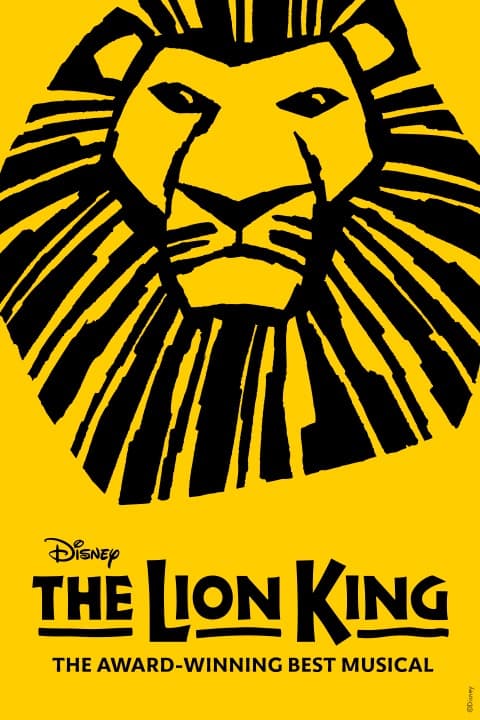
There is no greater gift than a child's first encounter with live performance. These works — enchanting, accessible, and unforgettable — represent the finest entry points to the performing arts. From the spectacle of The Lion King to the fairy-tale wonder of The Sleeping Beauty, each one plants a seed that will grow into a lifetime of passion.
Works born from uprising — the barricades, the resistance, and the refusal to be silent.
The performing arts have always been the art of resistance. From the slave chorus of Nabucco — which became the anthem of Italian unification — to the barricades of Les Misérables and the revolutionary fervor of Hamilton, these works remind us that the stage is where societies rehearse their most dangerous ideas.
Magic, myth, and the otherworldly — works that transcend the boundaries of the possible.
The stage has always been a place where the impossible becomes real. Swans transform into maidens. Ghosts rise from the grave. Entire worlds materialize from darkness. These works harness the supernatural not as spectacle but as metaphor — illuminating the mysteries that rational thought cannot reach.
Wit, farce, and comic genius — the works that prove laughter is the performing arts' greatest gift.
Comedy in the performing arts is never merely funny — it is subversive, compassionate, and devastatingly precise. From Rossini's impossible vocal fireworks to the gleeful irreverence of The Book of Mormon, these works deploy laughter as both weapon and balm. The highest art, disguised as entertainment.
The stage as political arena — works that grapple with power, justice, and the fate of nations.
From the Roman Senate to the American century, the performing arts have served as civilization's conscience. These works confront empire, corruption, and resistance with a moral clarity that no other medium can match. They are not merely political — they are prophetic.
Doomed lovers, impossible passions, and the most beautiful heartbreak in the performing arts.
The performing arts have always understood that love and death are inseparable. Mimi's candle gutters out in a Parisian garret. Giselle dances herself into the grave. Romeo and Juliet find in death what life denied them. These works transform private grief into universal catharsis — and remind us why we return to the theatre again and again.
The century that shattered every convention — from Stravinsky's riot to Sondheim's reinvention.
The twentieth century began with a riot in a Paris theatre and ended with the American musical ascending to high art. Between those poles: Britten's moral operas, Balanchine's plotless perfection, Beckett's existential void, and Williams's Southern gothic fever dreams. Nothing was sacred. Everything was possible.
Nineteenth-century masterworks — the golden age of grand opera, bel canto, and classical ballet.
The nineteenth century was the era of impossible passions and impossible technique. Bel canto sopranos scaled vocal Everests, Wagner reimagined the nature of art itself, and Tchaikovsky gave dance its most enduring vocabulary. These works are the beating heart of the repertoire.
The dawn of opera — from Monteverdi's revolutionary music drama to Mozart's divine perfection.
Before there was opera as we know it, there was Monteverdi's L'Orfeo — the moment when music and drama became inseparable. This collection traces the art form's first two centuries, from the ornate splendor of Handel's da capo arias to the crystalline perfection of Mozart's ensembles.
The three great ballets and their descendants — the works that made Tchaikovsky the soul of classical dance.
Tchaikovsky's three great ballets — Swan Lake, Sleeping Beauty, and The Nutcracker — form the holy trinity of classical dance. But his influence extends far beyond: Balanchine built an empire on Tchaikovsky's orchestral music. This collection traces that extraordinary lineage.
The complete Shakespeare canon as it was meant to be experienced — live, dangerous, and immediate.
Four centuries after his death, Shakespeare remains the supreme dramatist. These plays are not museum pieces — they are living, breathing provocations that speak to power, love, jealousy, and mortality with an urgency that no subsequent playwright has surpassed.
The complete Wagner — from the cursed Dutchman to the sacred grail, including the complete Ring Cycle.
Wagner did not merely compose operas — he reimagined the very nature of art. His music dramas demand total surrender: fifteen hours for the Ring alone, each minute essential. This collection presents the complete Wagnerian cosmos, from the storms of Der fliegende Holländer to the benediction of Parsifal.
The complete Verdi — from early fire to late genius, the operas that defined Italian drama.
Giuseppe Verdi understood the human voice like no other composer in history. From the patriotic thunder of Nabucco to the autumnal wit of Falstaff, his operas chart the entire emotional landscape of the Italian soul. To know Verdi is to know opera itself.
Every opera by the supreme master of verismo — from youthful ambition to posthumous grandeur.
No composer understood the human heart with such devastating precision. Puccini's operas are not merely performed — they are experienced, each aria a wound, each finale an act of transcendence. This is the complete journey through his extraordinary catalogue.