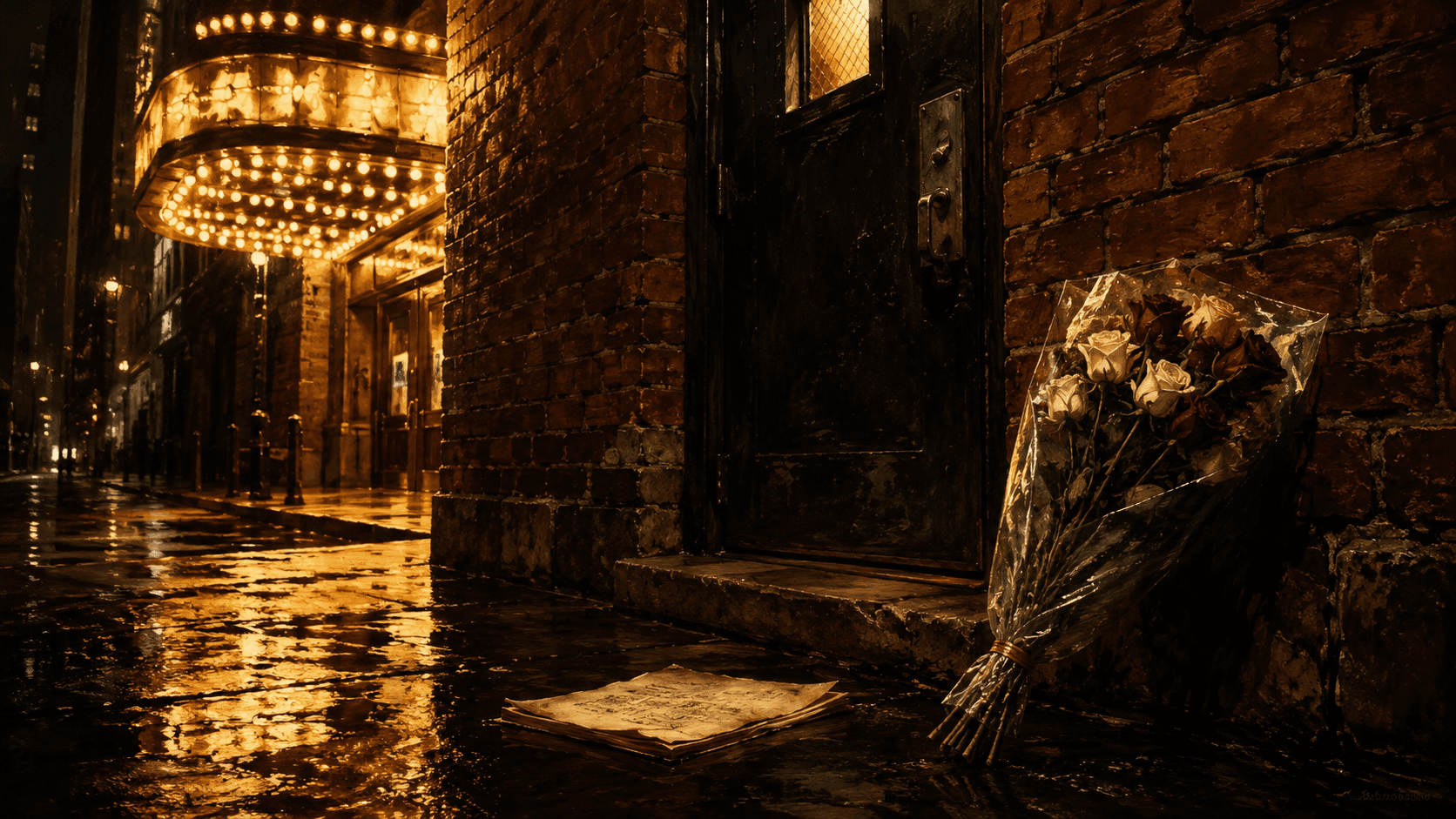
A Body of Work
Stephen Sondheim's shows are often discussed individually — Company's ambivalence about marriage, Sweeney Todd's Swiftian fury, Into the Woods's deconstruction of fairy tale. But they form a single coherent project, and listening to them in sequence reveals the full scope of one artist's intelligence.
The unifying theme is isolation — the difficulty, perhaps impossibility, of real connection — and the price of being fully awake to your own life.
The Early Period
A Funny Thing Happened on the Way to the Forum (1962) and
Anyone Can Whistle (1964) show Sondheim finding his theatrical voice in genre parody and theatrical self-consciousness respectively.
Company (1970) — his first mature masterpiece — examines urban loneliness through a form (the concept musical) that Sondheim and Harold Prince invented together.
The Middle Period
Follies (1971) is arguably his most complex work: a meditation on time, memory, illusion, and theatrical artifice.
A Little Night Music (1973) is his most formally perfect.
Pacific Overtures (1976) and
Sweeney Todd (1979) are ambitious formal experiments — one in Japanese theatrical tradition, one in Brechtian grotesque.
The Late Period
Sunday in the Park with George (1984),
Into the Woods (1987),
Assassins (1991), and
Passion (1994) constitute a final sustained period of artistic ambition.
Sunday contains his most personal lyric — 'Finishing the Hat' — and his most profound meditation on the artist's vocation.