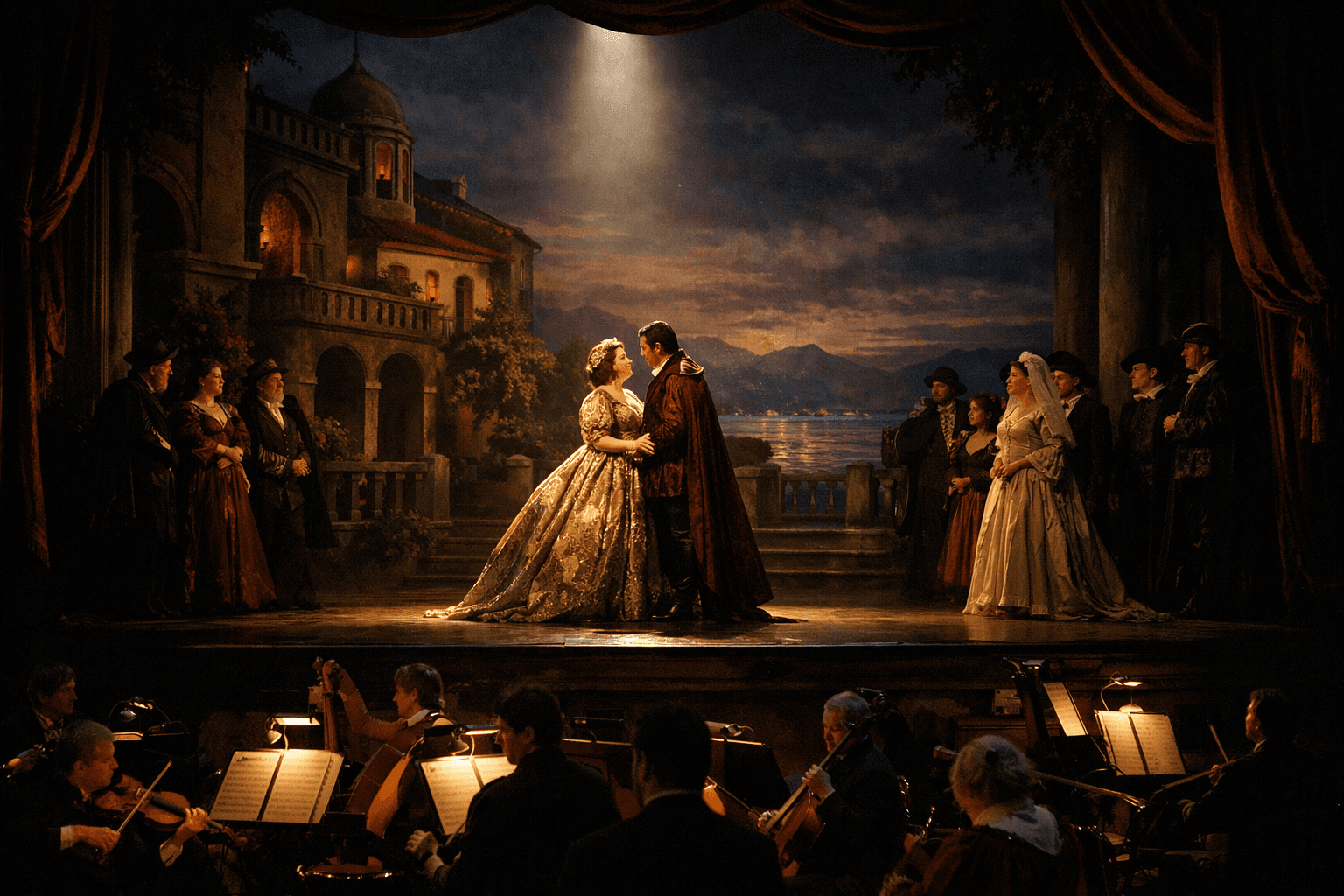
OperaPremiered 1842Libretto by Salvatore Cammarano
Synopsis
Nabucco presents the conflict between the Babylonian king Nebuchadnezzar II and the Israelite people held captive in his realm. The drama intensifies through the personal entanglement of Nabucco's daughter Abigaille, who harbors a forbidden love for Ismaele, a young Israelite prince, while the rightful Israelite king Zaccaria leads his people's spiritual resistance. When Nabucco's pride drives him to blasphemy, he is struck mad, and Abigaille seizes power, using her newfound authority to persecute the Israelites and separate the lovers. The opera culminates in themes of redemption and divine justice as the king regains his sanity and faith, ultimately granting the Israelites their freedom. The work explores the tension between earthly power and spiritual conviction, with the famous chorus of enslaved Hebrews yearning for their homeland becoming one of opera's most iconic moments.