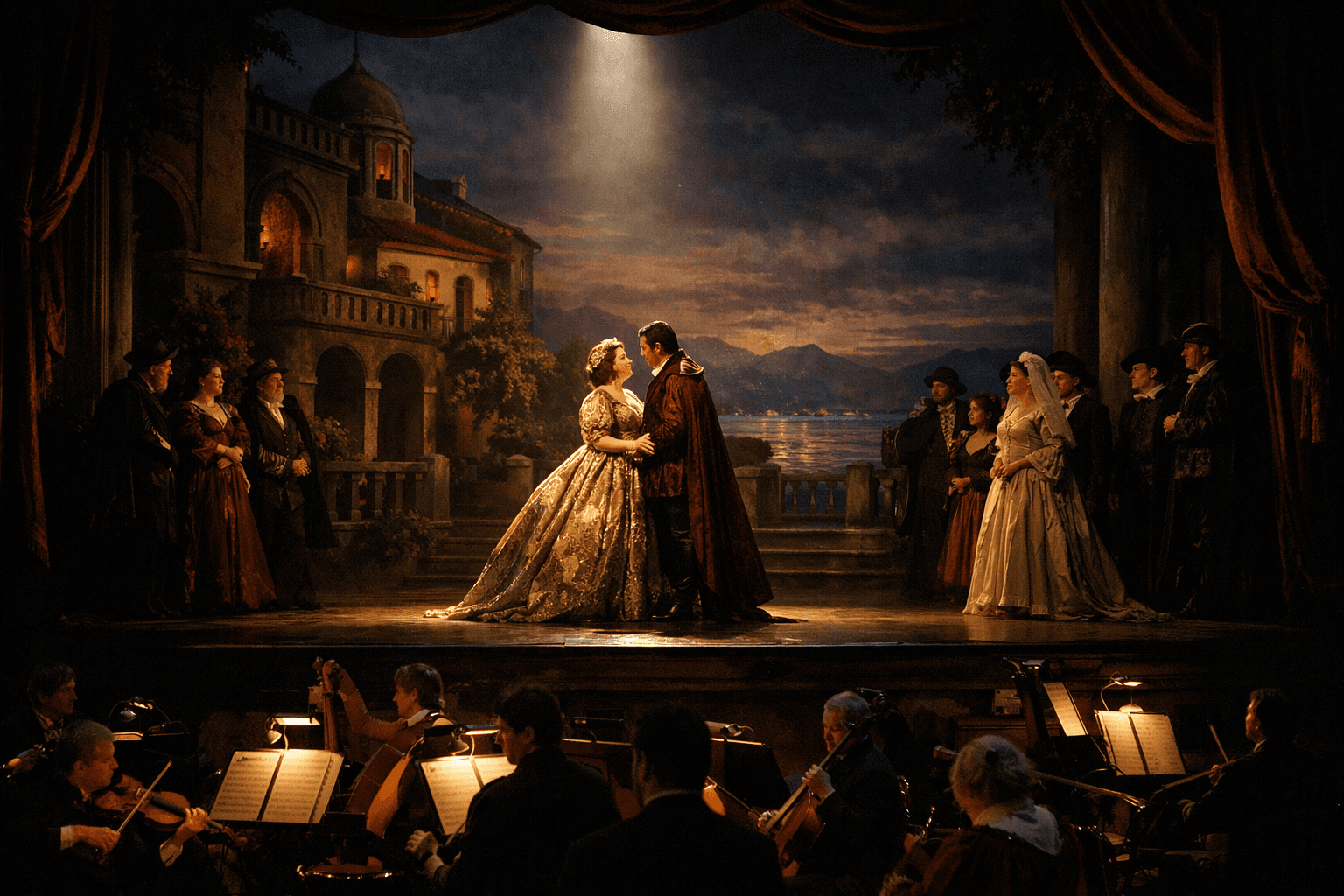
OperaPremiered 1874
Synopsis
Verdi's Requiem is a monumental choral work setting the Latin Mass for the Dead to music of extraordinary dramatic power and spiritual depth. Rather than a traditional opera, it is a concert work for soloists, chorus, and orchestra that transforms the liturgical text into a profound meditation on mortality, judgment, and redemption. The work unfolds through interconnected movements, beginning with the Dies Irae—a vivid depiction of divine wrath and the Day of Judgment rendered in music of apocalyptic intensity. Verdi balances moments of terror and anguish with passages of ethereal beauty and hope, particularly in the Lacrimosa and Agnus Dei. The four soloists—soprano, mezzo-soprano, tenor, and baritone—emerge from and blend with the chorus, their voices intertwining in passages of intimate vulnerability and collective supplication. The orchestration combines operatic grandeur with chamber-like delicacy, creating a work that transcends genre boundaries. Composed as a tribute to the Italian writer Alessandro Manzoni, the Requiem stands as one of the greatest achievements in choral music, uniting technical mastery with profound emotional and spiritual resonance.